


For people who fall in love with Japan and its culture – deeply enough to devote years to studying the language, and maybe even to move here, like me – there’s always some unforgettable hook that started it all.
Maybe it was that first bite of truly good sushi that you popped into your mouth just seconds after the chef shaped it with masterful hands, or the film that fueled your obsession with ramen. Maybe it was the rich storytelling universe of anime. Perhaps a museum visit or even a trip to Tokyo sparked your interest. Or, if you’re lucky, a Japanese friend introduced you to something that simply made you want to know more.
My entry point was firmly grounded in a childhood when all things Japanese took over popular culture in the U.S. Pretty much everything that fascinated me then has a current-day correspondence: I still love the gorgeous stationery, the artsy fashion sensibilities, and especially the food. Moving to Japan 9 years ago was the result of decades of dreaming about all of it.
But what about staying in Japan (or, for those living elsewhere, staying with Japan through some kind of long-running cultural connection)?
What about keeping up the interest after the initial infatuation fades?
I always credited the popular ‘80s movie The Karate Kid as a big influence on my kid self. I have no shame in saying that at all. Growing up in a super white, conservative, small town in Pennsylvania, movies and books and music were my portals to the world at large, to other cultures and ideas and ways of living.
But while I used to think that Daniel-san’s story of resilience and standing up to bullies was my inspiration – sure, I also had a crush on babyfaced actor Ralph Macchio when I was 9 – it wasn’t until I was a young adult that I realized it was Mr. Miyagi who had a bigger influence on me.
His character was quirky, wise, funny, and quietly powerful – a stealth hero who unexpectedly became a beloved mentor amid a solitary life shaped by loss and heartbreak.
And Mr. Miyagi’s exquisite garden, with its koi fish and bonsai trees, was a living, breathing invitation into something deeper about Japan.
I didn’t realize it then. It took years to form into something lasting. Then one day it dawned on me that I could step into that garden, metaphorically, and never look back. While pop culture got me there, the timelessness of traditional aesthetics made me want to stay.
It remains fresh for me because of Japan’s love of seasonality. It’s woven so tightly into the culture that it’s almost inseparable – not just in obvious milestones like cherry blossom season or New Year’s, but also subtle shifts in flavors, poetic references, and visual motifs that are layered into everyday life in Japan.
(If you want to know more, a dear teacher and advisor from my university, Professor Haruo Shirane, detailed the fascinating history in his book Japan and the Culture of the Four Seasons: Nature, Literature, and the Arts.)
Every year, the year unfolds with its anticipated holidays and rituals, and I can’t help but greet each one as both an old friend and an exciting new acquaintance. Currently, it takes form through small, beautiful shifts in my garden.
Yes, I finally have a Japanese garden of my own.
It’s true that even during the coldest part of winter, something is quietly waiting for spring. Even underneath the snow, dormant grasses are waiting to feel the sunshine.
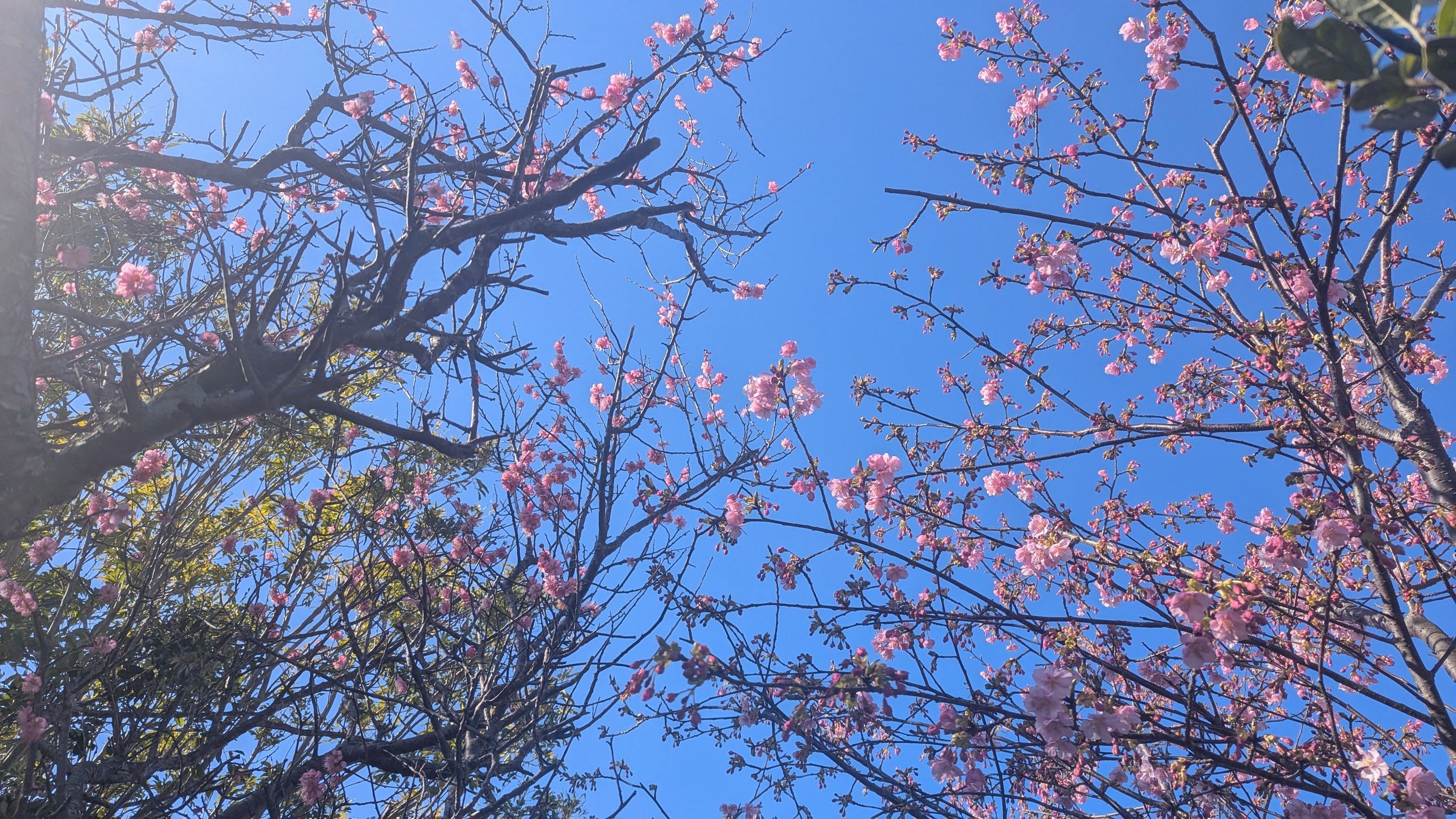
In Izu, where I have a traditional house with a tea room and garden that serves as an oasis/escape from my other life in Tokyo, the nights are windy and freezing cold (no snow, though). By morning, the skies are calm and steadily grow brighter into a clear, brilliant blue. Gnarled plum tree branches reach out to their cherry tree neighbor, each one already dressed in pink petals. It feels like things are coming to life a bit earlier this year.
Or are they? My kinkan tree – a.k.a. kumquat – is running a bit late. The fruits have been slower to ripen, but this year they’re bigger, sweeter, and generally happier. Maybe the tree liked being pruned back last year.
And after so many weeks of relative silence – after the soft chirps of late-autumn insects were a faded memory and only the stark echo of crows punctuated wintry afternoons – new voices have returned in the form of tiny squeaks from little birds called mejiro. They’re named after the white rings around their eyes, which make their lime-green feathers look even more vivid. These curious guys arrived just in time for those pink blossoms, whose nectar is their favorite snack.
So tonight, on the last full moon of the lunar year, it truly feels like a moment where winter is flirting with spring. Japan has recognized the Gregorian calendar since 1873, but glimmers of the old traditional calendar, called Kyūreki, still resonate. And on February 4th, Risshun, the official beginning of spring according to that old system, marks the beginning of a new cycle of 24 seasonal divisions, known as sekki.
Maybe it was a coincidence that my January resolution to write more regularly for Quiet Calling took a while to take shape. By the Western calendar, I’m already behind.
But here in Japan, I feel right on time.
Thank you for joining me.
Beautiful reflection on timing and renewal. The idea that even underneath snow something's waiting for spring really captures how creative reboots work, they're not starting from zero but waking up whats already there. I've had similar expereinces with seasonal cycles shaping my creative energy, its kinda wild how external rhythms can reframe internal commitments and make januray resolutions feel arbtrary.
Thank you for "rebooting!" I've missed your writing and lovely expressions of life in Japan.