

Escape is Actually a State of Mind
Slowing down amid the crowds at the famous Dazaifu Tenmangu shrine

Can you visit a 1200-year-old spiritual landmark during peak tourist season and still experience some kind of inner peace?
In Japan, this would be a fair question even if international tourists weren’t visiting in record numbers. Certain places have been attracting crowds for generations, if only for seasonal moments such as the New Year, festivals, and natural marvels.
Plum blossom season kicks off the spring spirit in many parts of the country, so the timing was intentional for my recent visit to Dazaifu Tenmangu. It’s a legendary Fukuoka shrine that’s famous for a tapestry of plum trees covering its grounds in every shade of pink, from the deepest raspberry to softer, paler hues that sometimes confuse people for sakura. Some of the flowers are a crisp, pure white reminiscent of fluffy snow on the branches.
The plum blossoms here have long been associated with Sugawara no Michizane, the Heian period poet, politician, and scholar who was exiled from Kyoto to Dazaifu in the year 901. After his death – and following a series of disasters that were attributed to his vengeful spirit – he was eventually deified at Kyoto’s Kitano Tenmangu shrine as Tenjin-sama, the kami of scholarship. Students still pray to him there, at Dazaifu, and at other Tenjin shrines to pass their entrance exams.
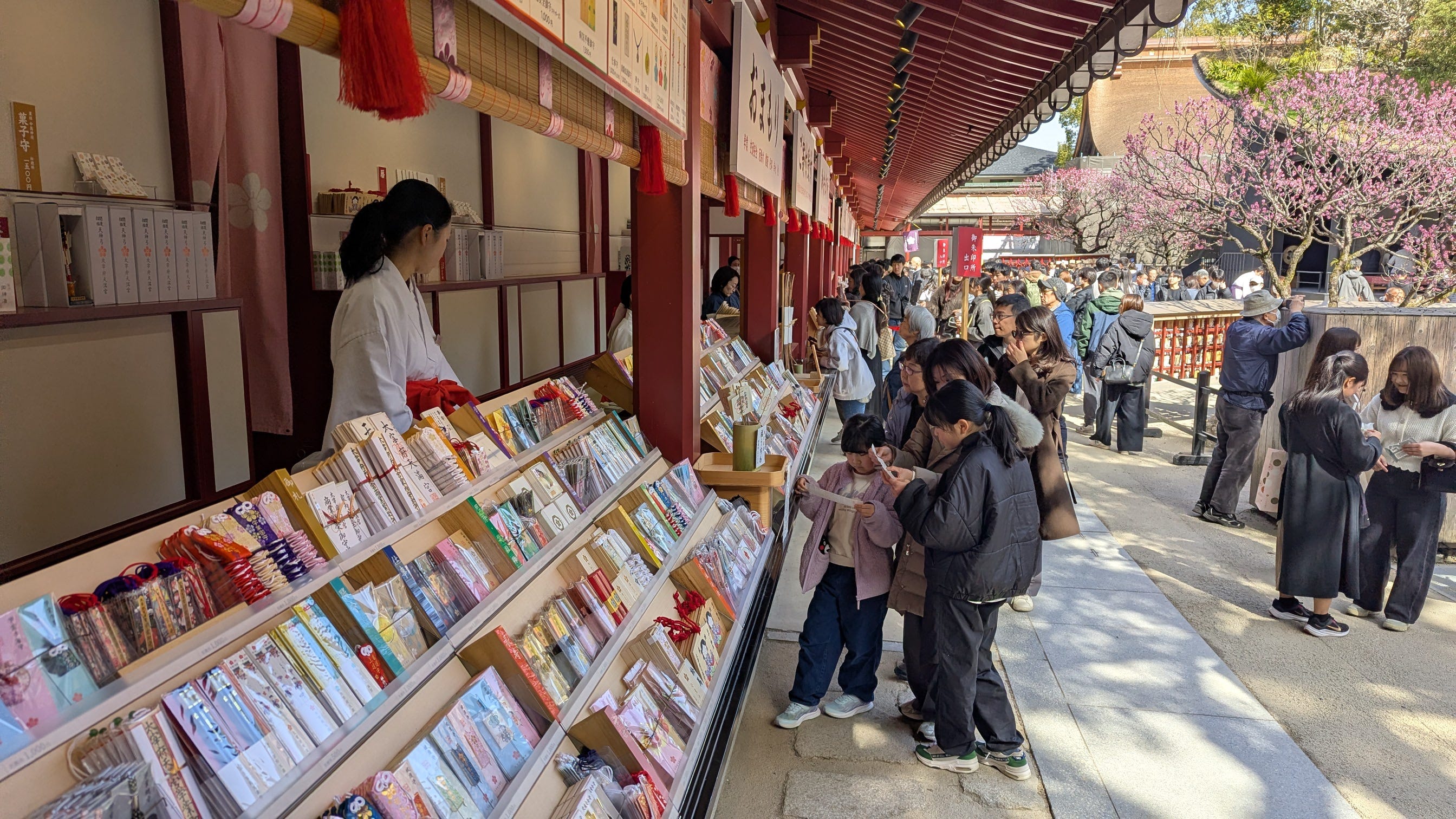
I knew that there would be plenty of other visitors vying to see the same spectacular sights, and I had to gear myself up for dealing with the crowds. Because let’s face it – if solitude and silence were the only way to find tranquility, then we’d all be stuck at home a lot more.
For me, the answer to finding peace amid the chaos is mindful travel.
That means slowing down on purpose. Paying attention. Going with the flow even when that means joining the stream of people spilling out of the trains and buses, filling up the streets, and queueing for famous sights.
Escape is actually a state of mind. The first step to get there is acceptance. Expect to encounter the obvious things that might annoy you about a busy place and then find some way to be entertained by it all, perhaps to find solidarity with everyone else who’s waiting in line with you.
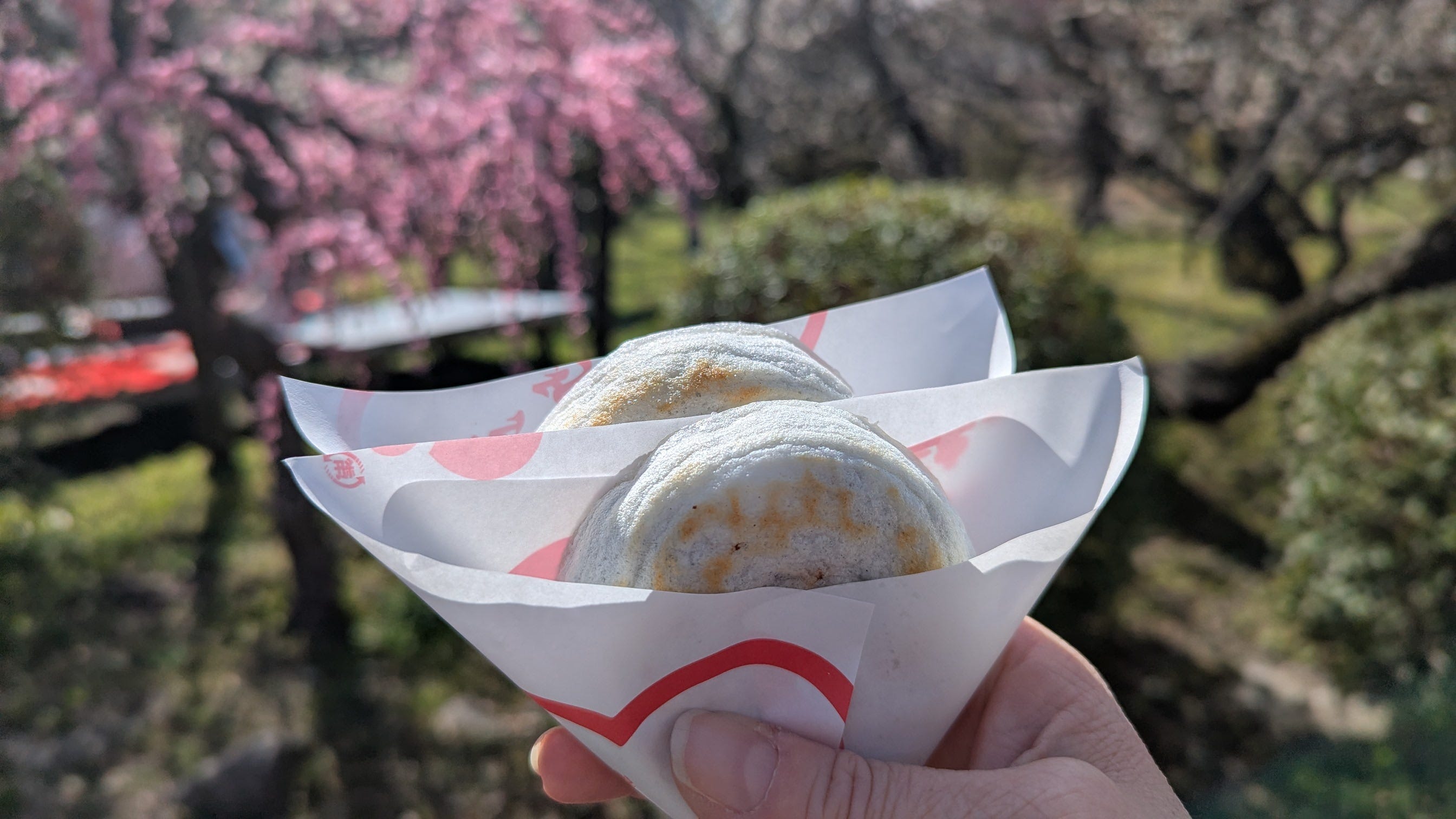
It helps to have a sense of humor and an eye for beauty. Dare yourself to find something to smile about, like catching a glimpse of a little kid taking her first bite of a hot umegae mochi, a chewy, grilled rice dumpling filled with sweet, molten red bean paste and seared with a tiny plum flower emblem. Countless vendors sell these treats along the main road here.
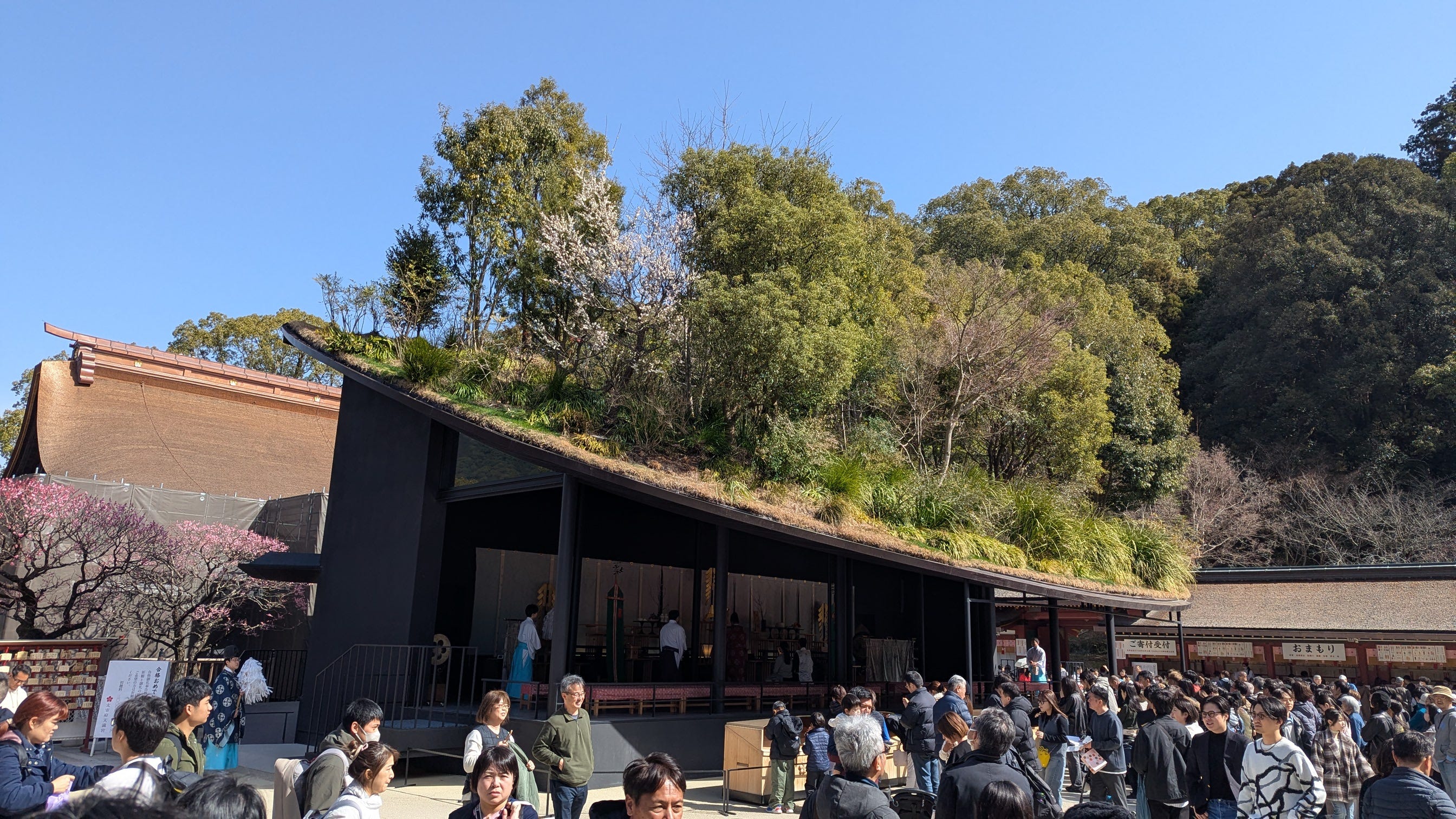
At Dazaifu, I took my time noticing the details of the place itself, like the main shrine where people lined up to say a prayer. Before it was my turn to wish for world peace, I looked up and found it fascinating that trees were growing on the roof above the altar.
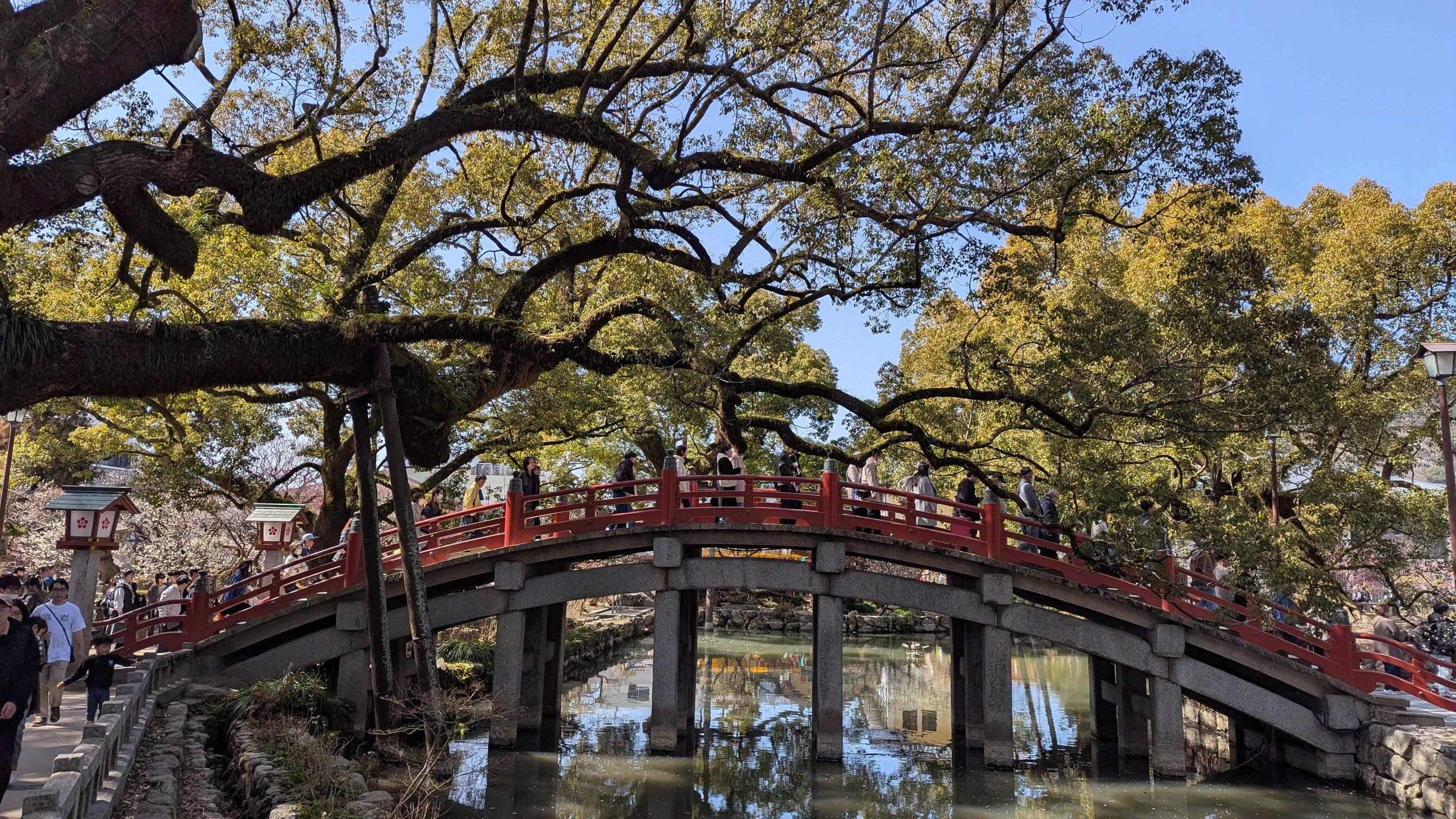
In fact, awe-inspiring trees were everywhere across the grounds, from the grove of impeccably pruned plums to the ancient twin camphors entwined at the base of their massive trunks, referred to as “husband and wife.” Another huge tree struck an unforgettable impression with its thick, gnarled branches covered in ferns like shaggy fur, a heavy wooden support holding it horizontally as it reached towards a sacred bridge painted with glossy red lacquer.
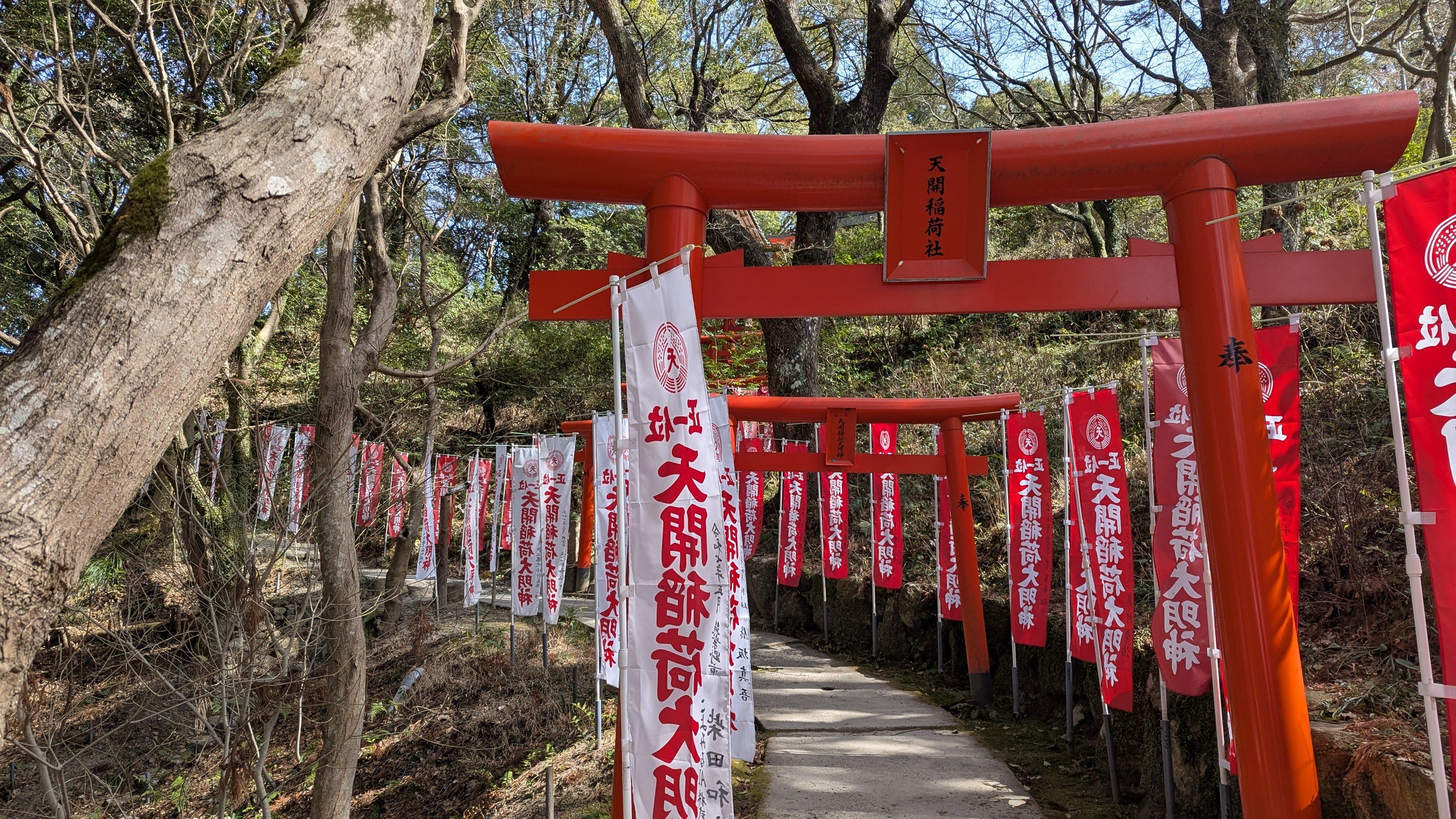
Further beyond, the crowds thinned out by about 90 percent for those who continued up the wooded mountain. The reward for this was a noticeable drop in decibels – human voices swapped for bird calls and the faint sound of the breeze blowing. A long row of crimson torii gates beckoned visitors to keep going further up the hill.
Before reaching the small upper shrine, there was a steep stone staircase as a final challenge (I considered it a shortcut over the less-steep but longer path nearby). Instead of a hundred people waiting to pray, there were maybe ten. Persistence had a payoff.
It wasn’t a remote power spot, shrouded in mystery, and it wasn’t even quite quiet. Nearby, just after I turned to head back down the hill, I saw a group of happy young women posing for a photo, all dressed in pastel kimono. They took the time to come here too – making their way up that mountain, admiring the plum blossoms, trekking through the torii in their traditional zori sandals.
Seeing their joy was enough to make me smile, too.
Such a lovely account of your holiday. I'm happy that you found some peace along the way.
I enjoyed the escape!