

Fukuoka on My Mind: A Long Weekend of Yatai, Sake Sipping, and Deep Soaks

Konbanwa from Fukuoka in southern Japan, where spring has already sprung in the form of gorgeous plum blossoms, mild breezes, and (unfortunately) a dose of pollen that has everybody sneezing from the onset of allergies. I heard that you have to live in Japan for about five years for kafunsho 花粉症 to kick in, and mine struck like clockwork four years ago.
So the last time I visited this city, I was still blissfully sneeze-free. It was exactly six years ago, in February 2020, right on the cusp of the pandemic – just as the news was getting intense but before it really sunk in that something radically different was about to happen in our lives. As soon as I got back to Tokyo from that trip, I realized that all the convenience stores were sold out of face masks. Within a week or two my office closed. I had no idea it wouldn't open its doors for a couple of years.
So I've been craving a return to Fukuoka for a while. The appeal of this city is a combination of young energy, a compact and walkable layout, and the friendly, laid-back vibe. It's urban enough for a city fix, but in comparison to Tokyo, the literal change of pace feels rejuvenating. Sure, there are crowds, but nothing too pushy.
I came here to revisit some familiar spots, explore new streets, and venture out to the legendary Dazaifu shrine, famous for plum trees and a deep history. I'll share a full report on that next week.
This week I'm working remotely from a hotel called The Royal Park Canvas Fukuoka Nakasu. The name reveals the location in the heart of the city but nothing about the hotel's aesthetic, which celebrates the natural abundance of Kyushu. My room is a cozy, well-designed space with an earthy feel – woodgrain walls, charming works by regional artists, a chaise longue stretched alongside a massive window where I can stare out at the cityscape. I also appreciate the queen-sized bed, which isn't always an option in Japanese hotels.
The nature theme extends to a soundtrack of bird song echoing through the hallways and a communal bath inspired by Kyushu’s volcanic geography. Its illuminated mist shower pours down from a circular ceiling port with an otherworldly glow, creating a soothing view over the steaming hot waters. Coming here for a soak is the obvious remedy for the day's fatigue.
There are lots of comfy places to sit around here, not only in the lobby but also on two outdoor terraces and in the lounge outside the public bath. And there are so many trees – every lounge window and terrace corner is lined with varieties transplanted from locations around Kyushu, creating a lush, green, peaceful expanse that compliments the riverside views just beyond the property.
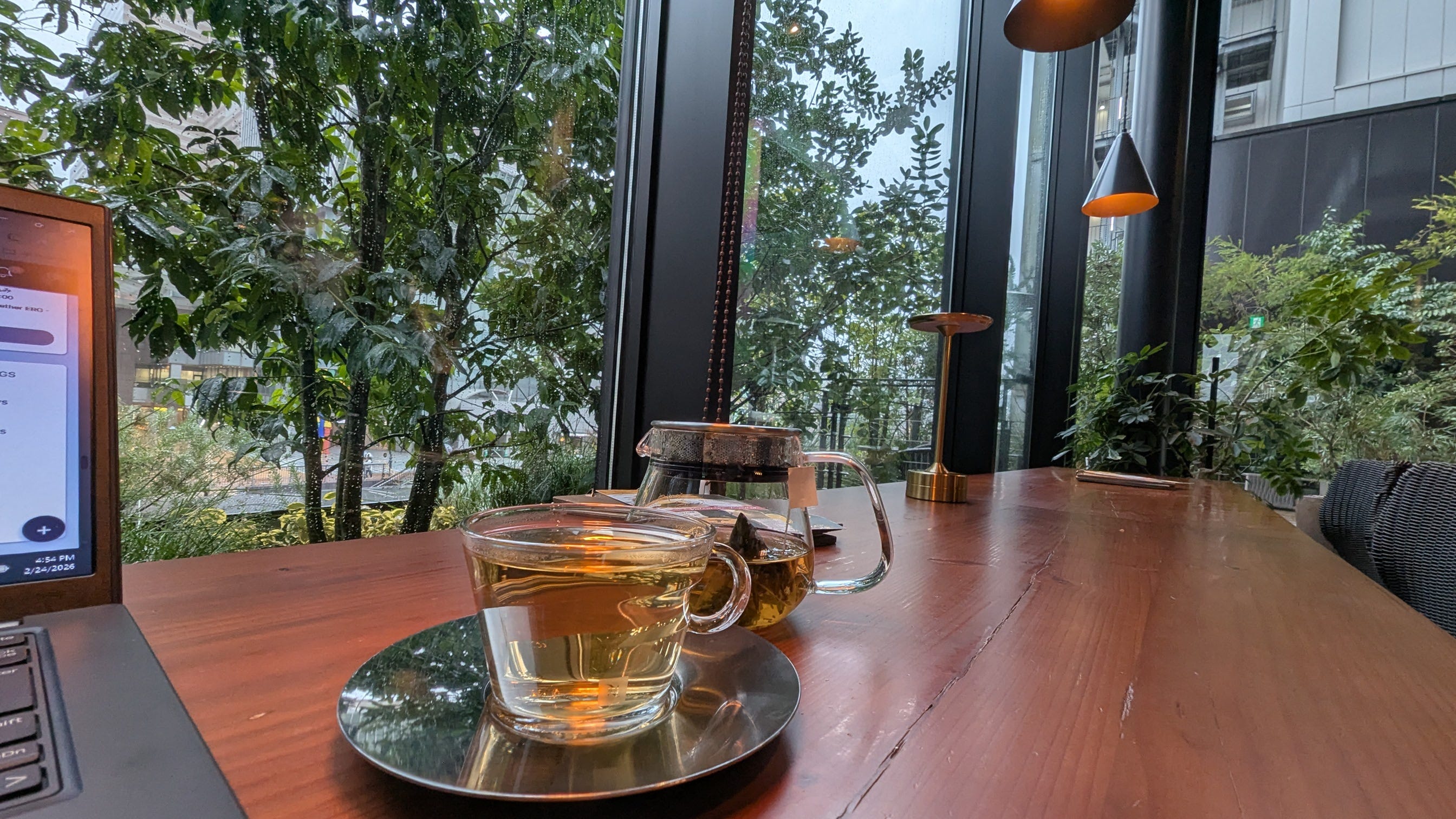
My husband and I were lucky to time the trip with excellent weather over the three-day holiday weekend – nothing but blue skies and sunshine. Today, I'm working remotely from the lounge, sipping a smoky, fragrant infusion of hojicha (roasted tea) and rosemary. Never had anything quite like this but I think I will crave it again. It's pouring down rain and everything has a dreamy glow outside as the daylight is fading. This kind of coziness makes me feel like doing nothing at all (in the best way).
I'm so glad we had the ideal weather for a yatai 屋台 dining experience the other night. Fukuoka’s open-air food hawker stalls are clustered in different areas around the city and they're a big reason why this is such a foodie destination. Expect to wait in line for the popular offerings, but know that scrumptious eats are your reward.
My strategy was to go before I was too hungry, because smelling the incredible sizzling meats, steamy stewed dishes and piping hot Hakata ramen – the signature noodle soup of Fukuoka with a milky, rich pork bone broth – was enough to make me ravenous by the time I finally got to sit down.
There were more than half a dozen people waiting ahead in line at Yatai Kitaro, the food stall we visited, but by the time we finished eating, there were triple the number of people waiting. Of course we had the ramen, along with tiny bite-sized gyoza with crispy fried edges and slow-simmered oden goodies steeped in hot broth with a dab of hot mustard on the edge of the bowl.
Another night we feasted at the counter at Kappo Sushi Hanaaza, which combined sushi with seasonal Japanese dishes in a seafood-laden course menu that paired well with Japanese sake. I loved the namasaba 生鯖, which is not available in Tokyo. After the catch, every minute counts if you want to eat it raw, and shipping to Tokyo takes too long. This has not been cured with salt and vinegar like the mackerel you'll find elsewhere in Japan. But here you're so close to the coasts where they harvest it that you can eat it in its natural state.
I usually keep lunch pretty casual, but the day we arrived, we were ravenous because we woke up before dawn and really didn't have a proper breakfast before the flight. We ended up splurging on a multi-course lunch at The Lively Kitchen, which seemed to be popular with groups of dressed-up women digging into fancy chawanmushi and downing glasses of white wine. It was nice to spend a leisurely hour or two being pampered and getting our energy back. The atmosphere combined sleek contemporary design with some hipster nods to nostalgia (curved moldings on the walls, mosaic tile). There was a well-stocked bar cart near the middle of the space, but if I really wanted to get my drink on, next time I’d go to the funky bar right inside the entrance.
A spontaneous long-weekend trip to Fukuoka has turned up so many surprising new gems and fun chats with locals that I can't wait to continue the discovery. Stay tuned for more next week, and thank you for reading.