


Lately I’ve been thinking about how to apply the common wisdom that if you want a different result, you need to do things differently.
There have been times in my life when I wanted radical change and I had to figure out how to make it happen – like when I committed to the idea of moving to Japan at midlife, a solid two decades later than expected. That was a complete uprooting of my life that forced me to jump through endless hoops. (Sometimes I’m still jumping.)
Nowadays, though, it’s a more subtle change that I’m seeking – an approach to living that becomes a new layer on top of what exists.
How can I cultivate more presence and calm even as the world delivers a fresh batch of daily drama? How can I find tranquility while managing stress and complexity? And how can I share this with my readers (you!) in a way that hopefully delivers positivity and inspiration?
I’m starting with small things, like taking a longer look at the familiar, or tweaking the routine. This week, that meant turning a predictable business trip into an opportunity for slow, solitary reflection. Since I work remotely most of the time, I can choose between my Tokyo apartment and Izu house – or I can bring the laptop somewhere else entirely.
My latest work project took me to Aichi Prefecture, a manufacturing hub in central Japan. Instead of taking a late train home and just passing through Nagoya – Aichi’s capital and the fourth-largest city in the country – I decided to linger a bit. I’m so glad I did.
Decompressing from a busy schedule and getting a sense of place was top of mind, so I took a tiny detour just a couple train stops away from the city center to visit Atsuta Jingu. This grand shrine is one of Japan’s oldest and most esteemed, dating back 1900 years. It’s home to one of Japan’s Three Imperial Regalia, a sacred sword called Kusanagi no Tsurugi said to be a gift from Amaterasu, the Sun Goddess herself. (Good to note, the legendary sword is not on public view, but the shrine’s treasure hall is a museum full of other historical treasures.)
Stepping into the grounds, situated just across from a train station, the world becomes hushed and calm, as soaring old trees mute the city sounds just outside.
But Atsuta Jingu isn’t silent – it’s alive with the wind fluttering through the leaves, crows calling to each other from treetops, and a gentle ebb of passersby, a muffled crunch of footsteps on pale gray gravel.
Here, we take a break from the constructed human world of concrete and steel to remember that we’re just small components in a grander ecosystem.
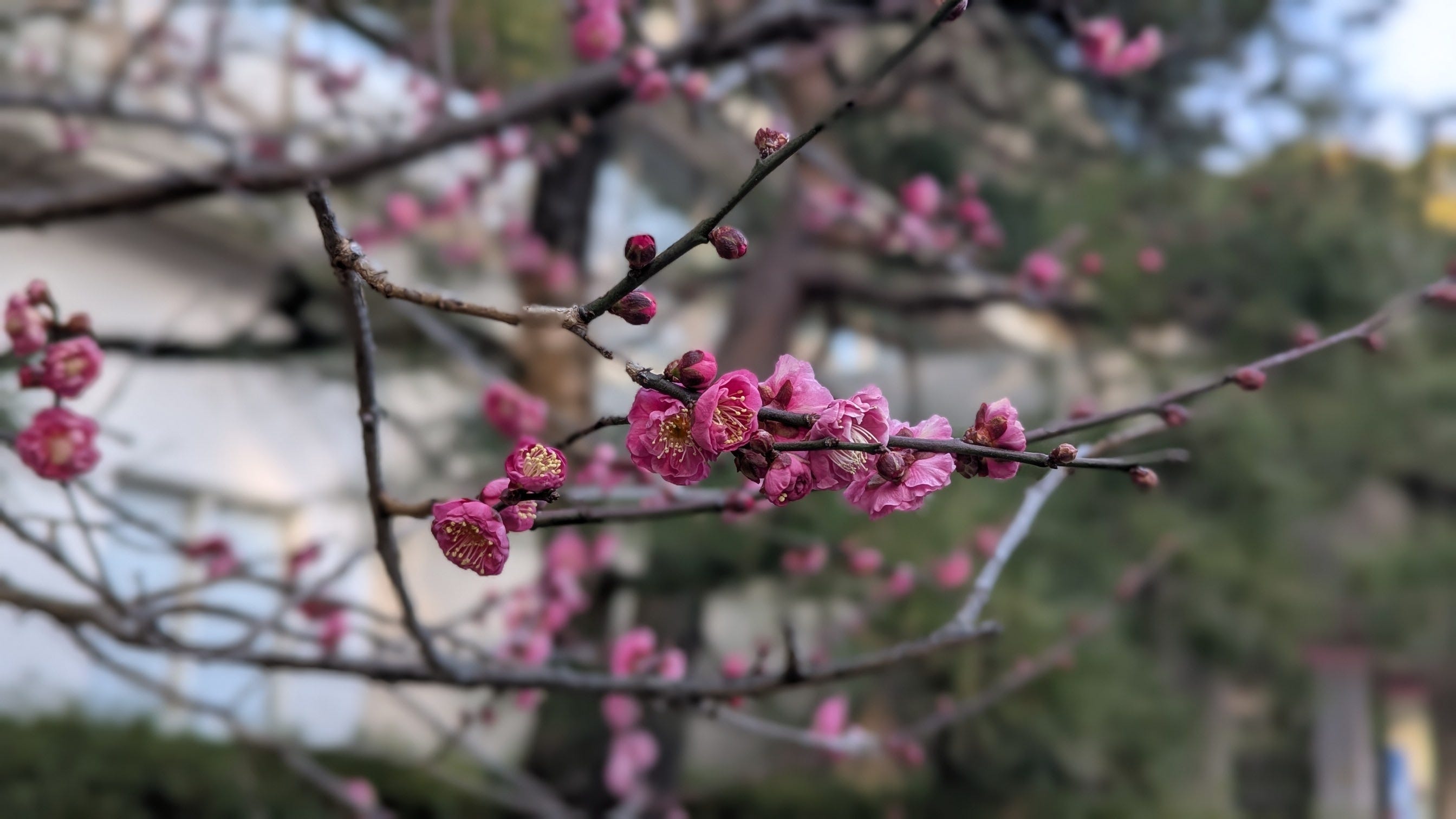
Here, the forest breathes and the air feels fresher, sweeter. Currently plum trees are in bloom with different shades of pink, a momentary show alongside solemn old evergreens.
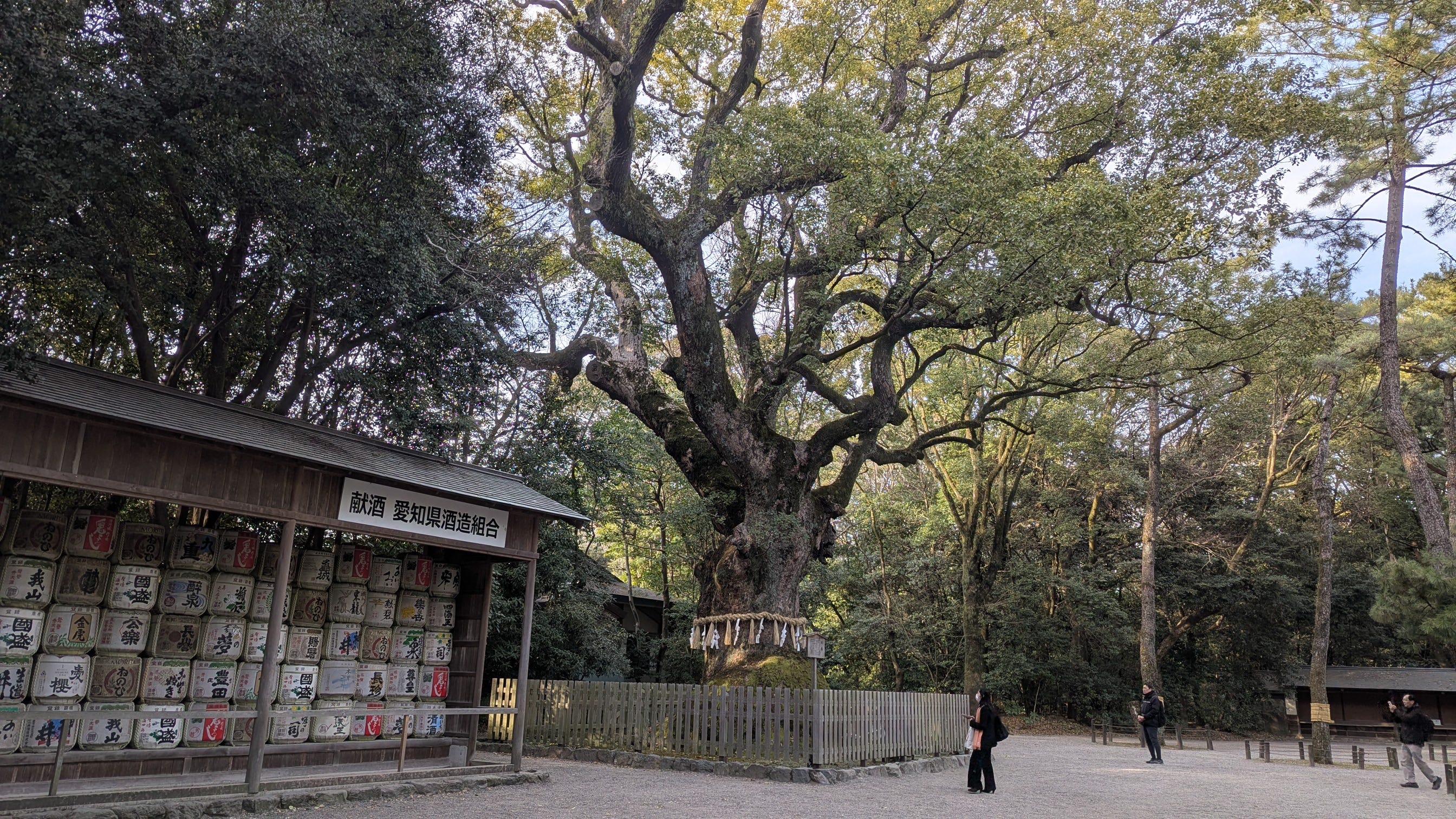
Passing through giant wooden torii that signify the approach to sacred space, the journey to the heart of the shrine feels like a magnet pulling you towards prayer. And just before you arrive at the center of it all, there she is – a massive, ancient camphor tree, Ōkusu.
This awe-inspiring tree has been here for more than a millennium – supposedly planted by the Buddhist master Kūkai – but regardless, its presence is undeniable. Sometimes it feels good to compare oneself to such a grand living thing that has endured for so long. Being reminded of how small and insignificant we are simultaneously frees me from mundane worries and connects me to something vast and profound. Trees like this are often found at the heart of Japan’s “power spots,” and to encounter them is always magical.
Rejuvenated by the forest-bathing vibes of a good shrine visit, I headed to my hotel. Lamp Light Books Hotel turned out to be a fun choice for a spontaneous stay – I’d say it’s ideal for solo travelers like me who are looking for boutique style without committing the whole budget to lodging. Given my itinerary, the central location was a big factor for my choice. I took a bus there from Nagoya Station but decided to walk an easy 15 minutes back at the end of my stay.
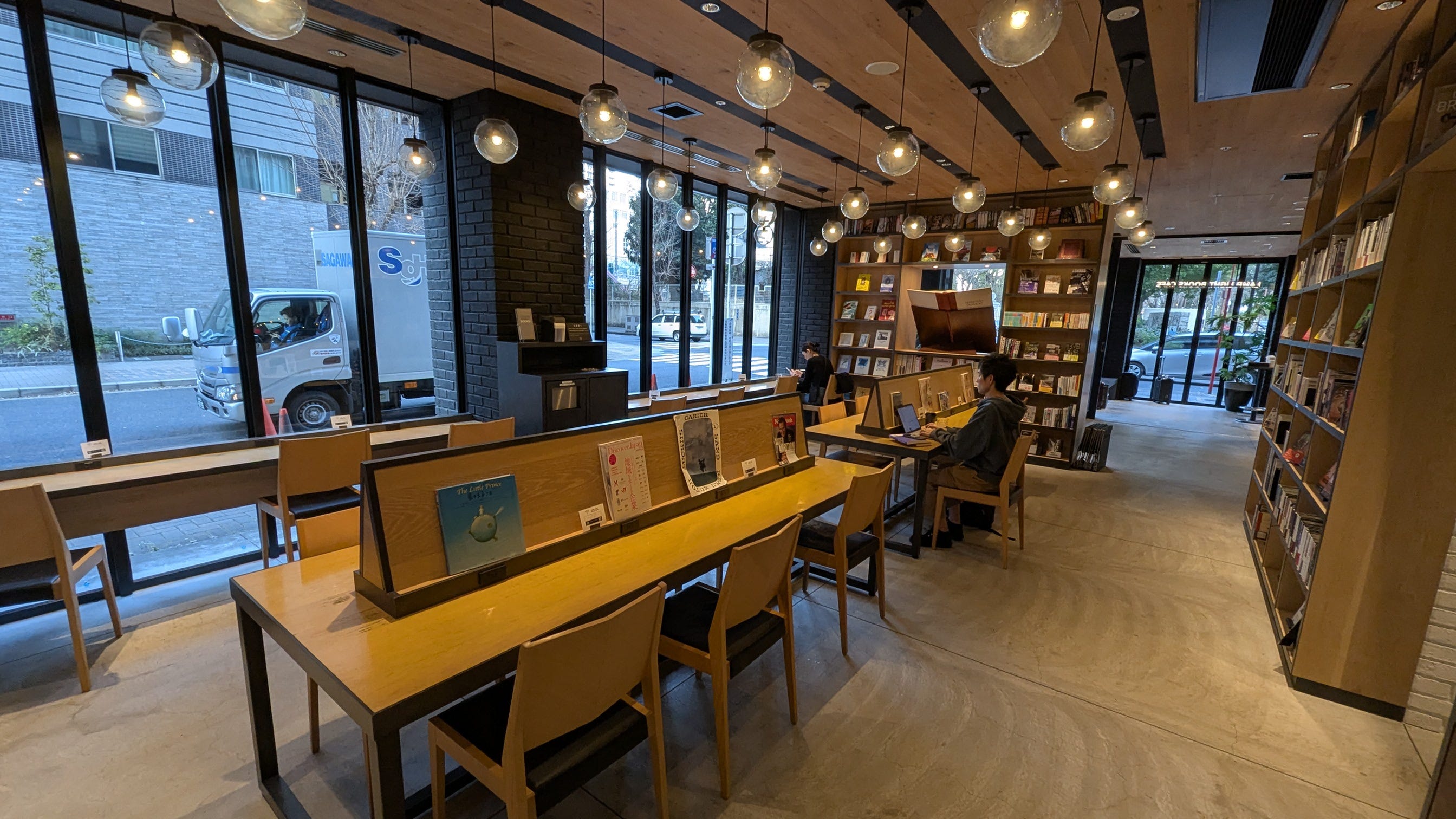
The name gives it all away, but bookworms are welcome here. Guests can check out items to take back to their room or just hang out and read in the lobby cafe area, where shelves are lined with the latest hip magazines and books (mostly in Japanese with some English selections mixed in). The chill, intimate vibe was easy to like – no scene, just a handful of people deeply absorbed in words.
I redeemed the “welcome drink” ticket as soon as I checked in and snagged a decent matcha latte from the barista. Up in my room, I plopped down on a lounge chair and put my feet up on a giant gray ottoman, sipping my latte while figuring out where to go before dinner. The room was compact (hello, Japan), but the details were more stylish than the typical business hotel – skinny black reading lamps and a black humidifier (crucial tech in winter) to match the black mini-fridge, hot pot, and digital clock. With a crisp white duvet and button-down nightshirt on the bed and a big rain shower head in the bathroom, I was well set up for a cozy night in.
But first I ventured out to the Osu shopping district to check out some vintage clothing and secondhand kimono shops. Sifting through neat old stuff always lights up my imagination and has inspired me since I was a kid hitting up central Pennsylvania flea markets. Here, everything is tucked away in a covered-arcade grid of old and new retail (clothing, electronics, knickknacks) and restaurants that stretches out from the majestic Osu Kannon temple, which has been here since 1612.

I could explore this quirky place for hours, but I ended up only making a few extended stops, thanks to friendly chats with store owners. I struck gold at The Other, a jewel box shrine devoted to all things mod ‘60s and funky ‘70s – the kinds of vintage clothing I used to live in, 24-7, back when it was still cheap and plentiful. Owner Suzuki-san turned out to be a friend of a friend from back in the ‘90s, so the visit was worth it just for the conversation, but I also snagged a groovy colorblock dress, a jade-hued blouse and a cheetah-patterned sweater from Yves Saint Laurent.
Likewise, I learned a little bit more about wine from a friendly chat with another woman dining alongside me that evening. She’s a wine importer, she explained, and the South African chenin blanc my server had just poured was one of many different natural wines from her portfolio. What an interesting job.
I’d stopped by Portrait, a bistro in the Fushimi neighborhood, for an impromptu dinner after eyeing the scrumptious-looking coq au vin on their Instagram account. As soon as I sat down at the bar, I noticed that the woman was digging into a plate of it. Smothered in dark, shimmering sauce, it looked just as good as the IG photo.
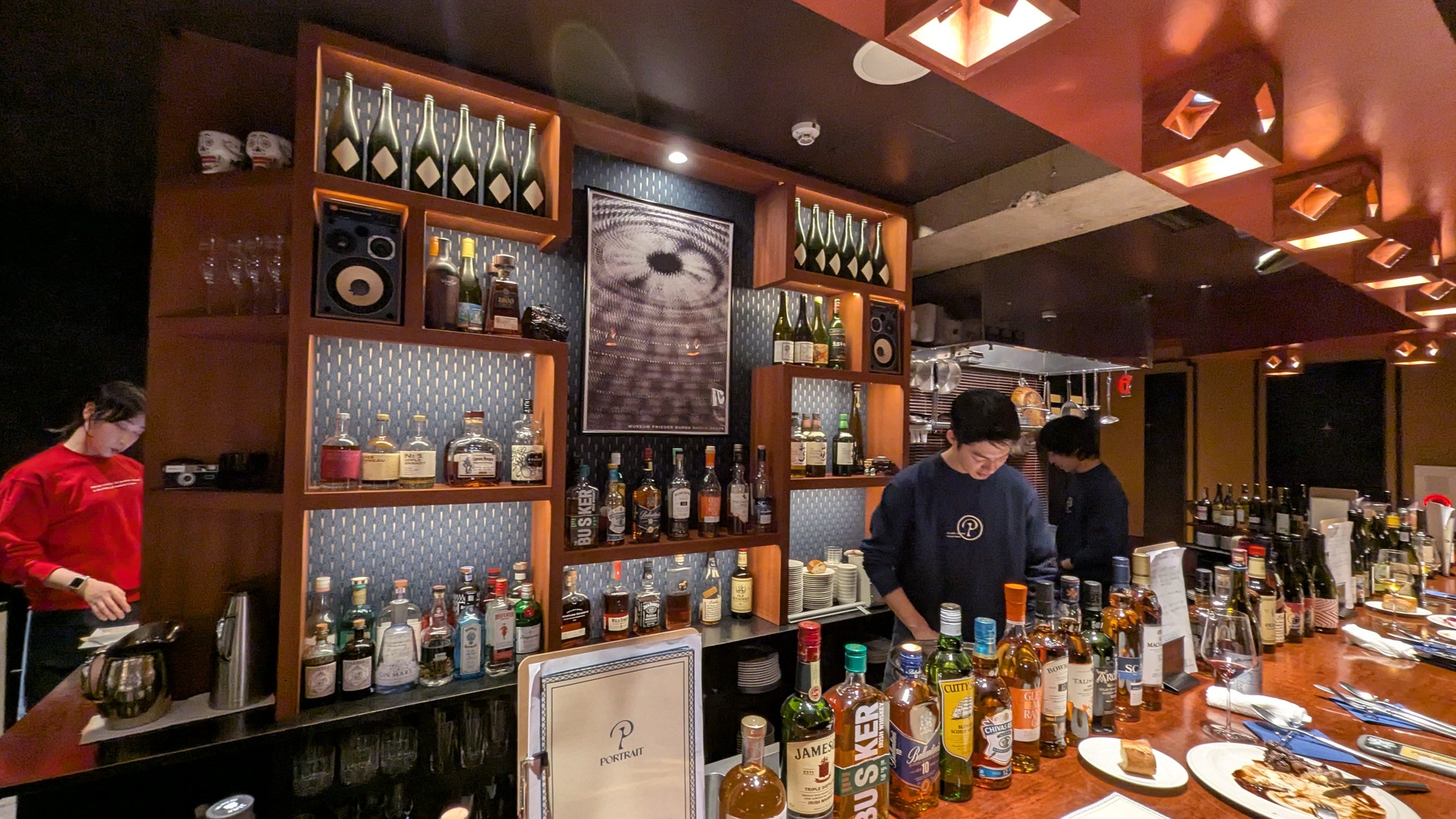
I knew I was in the right place. Moody lighting, soft music, and stylish wood shelves lined with liquor bottles made it feel cozy in a treat-myself way – elevated but unpretentious. I filled up on a bubbling dish of crab gratin and a large piece of roasted amadai (tilefish), a plump delicacy with sweet white meat and scales that crisp up to a marvelous crunchy contrast. It all made me feel welcome and content to just unwind, sip a few glasses, and lose track of time.
Nagoya was a short trip, but a valuable reminder. These moments of serendipity and small-world connections seem to happen more often when I create space for them and am open to receiving them. Every conversation with a stranger is a portal, every step into an unfamiliar place is a mystery about to be revealed. With each new question and consideration, I see change weaving itself into my daily life, shaping me into the person I am becoming.
Have you ever had a serendipity moment during a routine trip? I’d love to hear about what discoveries you’ve made when you decided to linger.
So nice! The places come to life through your experience and feel like I already know them.